
Torx Screw: Match More Than the Star-Shaped Recess
Identify a Torx screw by drive profile, T-size, thread, length and head shape. Match the hole and tool without assuming all star drives fit.
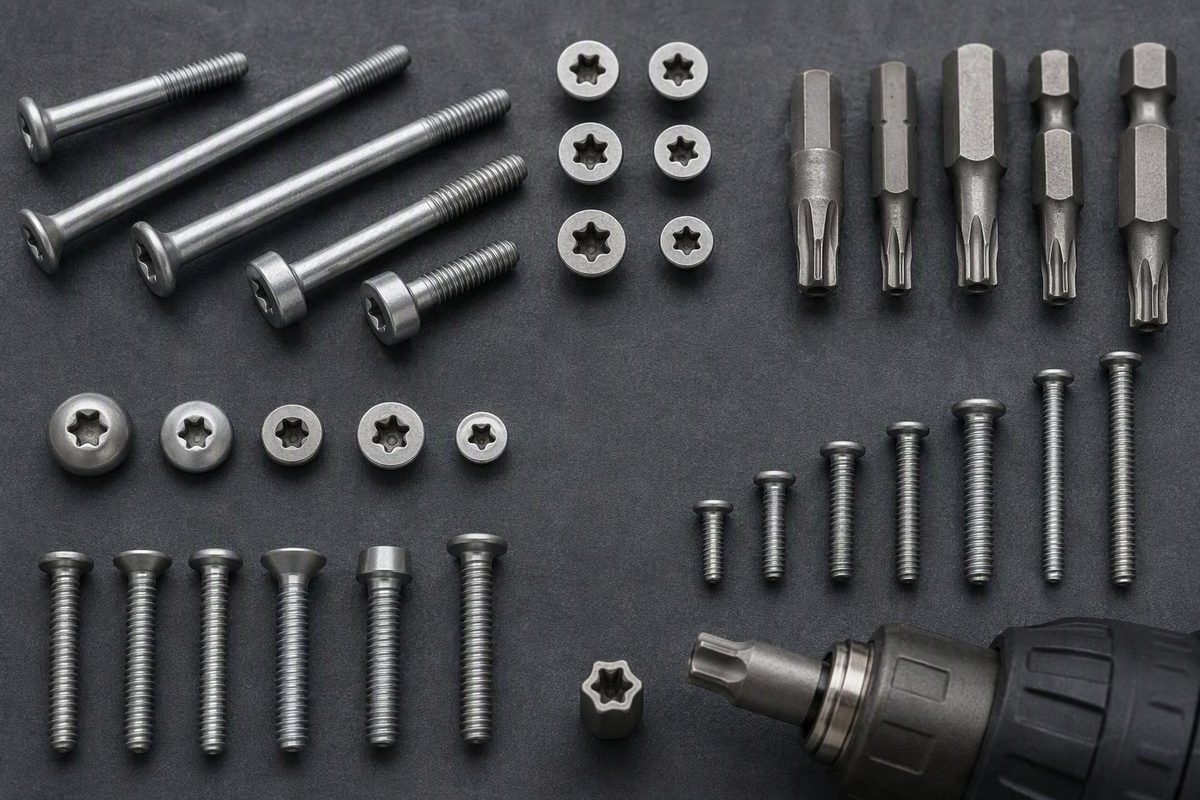
A standard internal Torx screw has a six-lobed drive recess that takes a matching Torx driver. The drive designation—such as T20—identifies the tool size, not the screw’s thread diameter, length or pilot-hole size. Torx drives are used on both inch-system and metric fasteners, so a matching bit does not establish thread compatibility. (Accu’s Torx screw reference, Acument’s drive specification)
For a replacement, match the thread system, diameter, pitch, length, head shape and material specification, including any required grade or coating, as well as the drive. For a new installation, choose the screw for the substrate, exposure and load first; then match its hole and driver.
Identify which Torx profile you have
Look into the recess before selecting a bit. A central pin or a different lobe shape changes the tool requirement.
| Screw drive | What to check | Tool requirement |
|---|---|---|
| Standard internal Torx | Six-lobed recess without a central pin | Matching T-size Torx bit |
| Tamper-resistant Torx / RESISTORX | Standard-style recess with a central pin | Matching security Torx bit with a hole to clear the pin |
| Internal Torx Plus | Six lobes with a different, elliptically based profile | Matching Torx Plus driver; do not treat it as ordinary Torx |
| Tamper-resistant Torx Plus | Five lobes and a central pin | Dedicated tamper-resistant Torx Plus tool—not a six-lobed security Torx bit |
These distinctions come from Acument’s Torx and Torx Plus specifications; Wera’s security Torx bit range documents the bore-hole requirement. Acument permits ordinary Torx tools to remove and reinstall internal Torx Plus fasteners in service conditions. That limited compatibility is not a reason to substitute profiles when selecting the installation tool.
If the fastener has a raised external lobed head rather than a recess, it needs a matching socket, not an internal Torx bit. External Torx Plus requires its own sockets: ordinary Torx sockets are incompatible, according to Acument. For driver-tip sizes and tool-holder selection, see the separate Torx bit guide.
Read the screw size separately from the drive size
Consider this specific catalog example: M4 × 25 mm, T20, ISO 14581 countersunk machine screw. Accu’s specification lists:
| Feature | Specification for this screw |
|---|---|
| Thread system | Metric |
| Nominal thread diameter | M4: 4 mm |
| Thread pitch | 0.7 mm |
| Catalog length | 25 mm |
| Driver size | T20 |
| Countersunk angle | 90°, with a stated +2°/−0° tolerance |
Here, M4 describes the thread and T20 describes the recess. The example does not mean every T20 screw has an M4 thread or a 90° head.
When replacing a loose screw, measure its major diameter across the outer threads, check pitch with a thread gauge, and compare the head and length with the original specification. Length is generally measured under the head for heads that sit above the surface, but from the top of a flat countersunk head. Confirm the particular drawing’s convention. (Bolt Depot’s length guide)
A screw that accepts the same bit can still have the wrong thread or project too far through the assembly. For a flush installation, also match the countersunk head to the countersink; drive type alone does not define that fit.
Match the hole to the screw and material
There is no universal “Torx pilot hole.” Hole preparation follows the threaded portion and the substrate:
- Wood screw: use the fastener maker’s pilot-hole guidance for the wood and installation conditions. Conventional wood-screw charts distinguish hardwood from softwood and straight from tapered drill bits. (Bolt Depot chart)
- Machine screw: match the mating tapped hole or nut to the thread diameter and pitch. The Torx countersunk machine screws in the example are designed for those threaded connections, not for cutting their own threads in wood. (Accu reference)
- Screw advertised as requiring no pre-drilling: check the exact product’s application limits. SPAX attributes that capability on its identified exterior construction fasteners to their point and thread design—not simply to the drive recess. (SPAX explanation)
Drive without damaging the recess
Check engagement by hand before applying power. Seat the specified bit fully; do not force one that only partly enters. Stop if it slips or begins damaging the lobes.
For a suitable drill/driver installation, keep the bit straight, start slowly and use the appropriate clutch setting. Makita’s BDF459 manual gives those screwdriving instructions and says to release the trigger as soon as the clutch cuts in. Use the fastener or equipment maker’s specified tightening torque where one is provided.
Works when: the correct profile and size engage fully, the screw suits the connection, and hole preparation and tightening follow the relevant instructions.
Fails when: a similar-looking bit is forced into the recess, thread or head dimensions are mismatched, or good driver engagement is mistaken for permission to apply more torque.