
Brass Screws Without Tears: the Right Jobs and the Pilot-Hole Rule
Brass has roughly one-third to half the tensile strength of steel, and the head can twist off abruptly, leaving a soft shank that extractors struggle to grip.
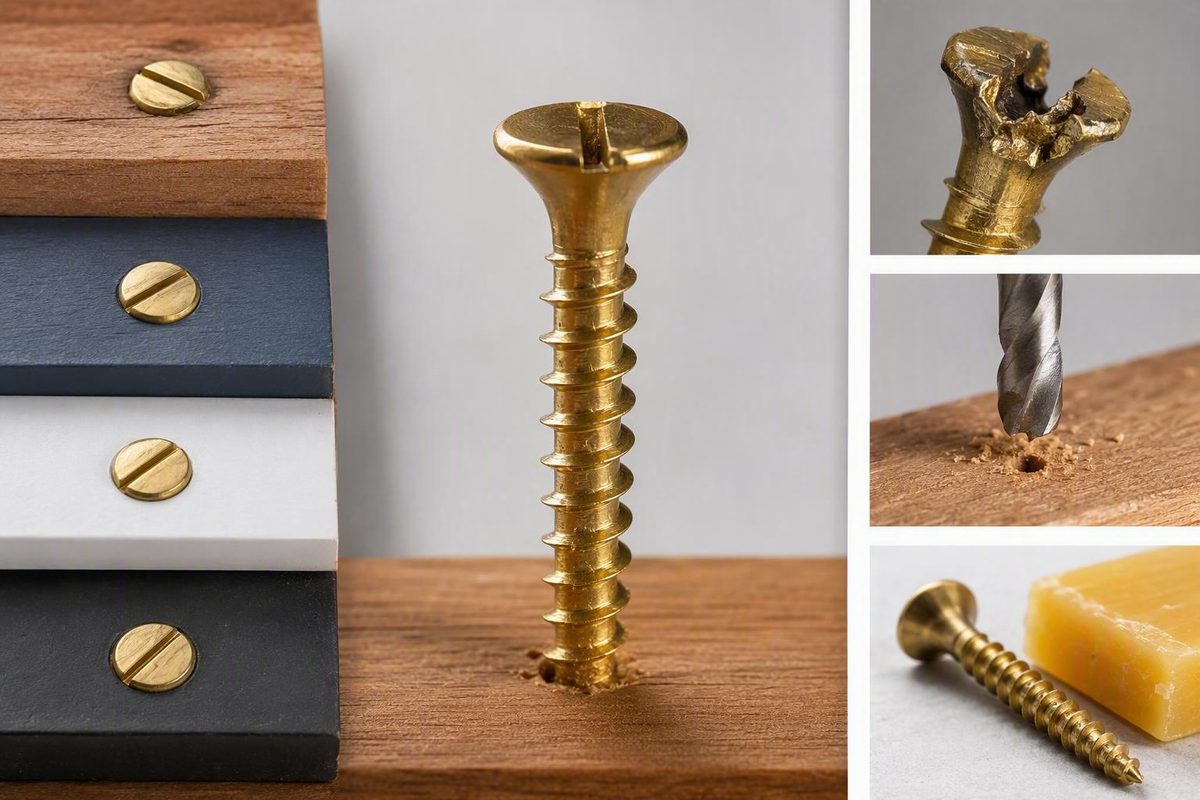
Brass screws exist for two honest reasons — corrosion resistance and looks — and one dishonest one: costing more at the checkout. Knowing which job calls for them saves both money and the misery of extracting a snapped shank.
Where brass belongs
Brass doesn’t rust. Around water and weather — boat fittings, exterior hardware away from structural loads, bathroom fixtures — it outlives plated steel by decades. It’s also the traditional match for brass hinges and antique restoration, where a steel screw head sticks out like a dent. And brass is non-magnetic and non-sparking, which niche work genuinely requires.
Where brass fails
Strength. Brass runs at roughly a third to half the tensile strength of steel, and the failure mode is abrupt: the head twists off flush with the work, leaving a soft shank that extractors chew instead of gripping. Never use brass where the screw carries structural load, in hardwoods without proper pilots, or with an impact driver — an impact’s hammer blows are precisely the loading brass tolerates worst.
The technique that saves them
- Pilot drill for the shank, not the threads — in hardwood, a second clearance hole through the top piece too.
- Run a steel screw of identical size first. Let steel cut the thread path, back it out, then drive the brass by hand. This one habit prevents nearly every snapped head.
- Wax the threads — paraffin or beeswax, not soap, which holds moisture.
- Drive by hand for the final seat. A screwdriver tells your wrist what a drill clutch tells you too late.
Buying without regret
Check you’re getting solid brass, not brass-plated steel — a magnet settles it in the aisle. Plated screws rust from the slot outward the first wet season. Slotted heads are period-correct for restoration; Phillips and square-drive brass exist for everyone who values their knuckles. Size up one gauge from the steel screw you’d otherwise use, and the strength penalty mostly disappears.